Learned Optimism: Your Secret Edge for 2026
TL;DR: Optimism isn't a personality trait, it's a trainable skill. Psychologist Martin Seligman's research on "explanatory style" shows that how you talk to yourself after a setback determines whether you bounce back or stay stuck. This guide breaks down the science, three head-trash-clearing habits from the Tyre Mentorship Program (the 24-hour rule, shrinking your obsessing window, and building an SSP folder), and how written goals, mentors, and daily gratitude turn optimism into results. Bottom line: build the habits below and you'll handle 2026's hard seasons like a tardigrade, battered but never broken.
How many times this week did your brain lie to you?
Not a huge dramatic lie. Just a quiet little whisper: this won't work, you're behind, you should've done better.
That's head trash. And it's costing you more than you know.
Here's the good news: your brain is trainable. Happiness isn't fixed. It behaves more like a muscle. You can build it, strengthen it, and use it to get through the hardest seasons of your career and your life.
That's the whole idea behind learned optimism. And it's your secret edge for 2026.
What is learned optimism, actually?
Psychologist Martin Seligman spent his career studying why some people bounce back from setbacks while others stay stuck. His answer: it's not personality. It's explanatory style, the story you tell yourself about why things happen.
Seligman's research, detailed in his book Learned Optimism, identifies three dimensions people use to explain bad events to themselves:
- Permanent vs. temporary — "this will always be this way" vs. "this will pass"
- Pervasive vs. specific — "this ruins everything" vs. "this one part didn't work"
- Personal vs. situational — "it's all my fault" vs. "here's what I can fix"
Pessimists default to permanent, pervasive, and personal explanations. Optimists default to temporary, specific, and situational ones. Same event. Different explanation. Radically different outcome.
This isn't soft self-help framing. Seligman's Attributional Style Questionnaire has been used in real workplace research, including a now-famous study where he predicted which insurance sales agents would outperform based purely on their explanatory style, not their sales aptitude scores. Optimistic explanatory style has also been linked to better physical health outcomes and lower burnout in long-term studies.
You can read more on the original research here: Seligman's explanatory style framework, explained.
That's the whole game: you can train yourself to explain setbacks differently, and the training sticks.
What is "head trash" and why does it sabotage you?
Head trash is the stream of unhelpful thoughts, self-doubt, catastrophizing, comparison, that quietly undermines your best intentions before you even start.
Clearing it isn't about pretending everything is fine. It's about building a reliable toolkit so that when life knocks you down (and it will), you know how to get back up fast.
My favorite mental model for this is the tardigrade. It's a microscopic creature, also called a "water bear," that can survive boiling, freezing, radiation, even the vacuum of space. It's endured five mass extinctions over 600 million years. Not because it's the biggest or fastest. Because its internal systems know how to handle disruption and restart.
That's the life you want in 2026. Not crisis-free. Tardigrade-tough.
What habits actually clear head trash? (3 from the Tyre Mentorship Program)
These are three habits I teach inside the Tyre Mentorship Program and have used myself across two decades of sales and leadership roles, including my time as a founding executive at HubSpot.
1. The 24-hour rule
When something painful happens, a lost deal, a harsh email, a botched launch, you do not react publicly. No rage-Slack. No impulsive resignation. No scorched-earth reply-all.
Feel the emotion. Walk around the block. But let the spike pass before you choose your next move.
This one tiny pause saves relationships, reputations, and opportunities. I've watched it happen again and again with mentees who almost torched a client relationship over a 9 p.m. email, then thanked me the next morning for talking them off the ledge.
2. Shrink the obsessing window
High achievers tend to replay mistakes for weeks or months. A more useful habit: time-box your rumination.
Start by letting yourself stew for one day. Then aim for half a day. Then an hour. Then "three laps around the house and I'm done."
Over time your brain learns something important: setbacks are events, not identities.
3. Build your SSP folder
SSP stands for Shameless Self-Promotion. Simple concept: a folder where you save every unsolicited compliment, thank-you email, positive review, or Slack shout-out you ever receive.
On the days your self-talk turns brutal, open it and force your brain to reckon with the data. Dozens of real humans whose lives are better because you showed up. That's not ego. That's the antidote to the lie that you're failing at everything.
Stack these three habits and you're quietly building an internal life-support system. You become the person who takes a punch, professionally and personally, and comes back with humor, curiosity, and a plan.
How do goals, mentors, and gratitude turn optimism into results?
Optimism is a nice theory. Goals, mentors, and gratitude turn it into a roadmap.
Write your goals down, not just think about them
Decades of research back this up. Psychology professor Gail Matthews at Dominican University ran a controlled study of 267 professionals and found that participants with written goals achieved significantly more than those who only thought about their goals, and those who wrote goals, shared them, and sent weekly progress updates scored highest of all groups studied.
I've tested this personally for four decades, ever since a conversation with productivity legend David Allen changed how I thought about intentionality. I wrote up the full process, including the six-step framework and free template I use with mentees, in What I Learned From 40 Years of Writing Everything Down.
If you've resisted goal-setting, I get it. My advice: start small and messy. Write one concrete outcome you want by December 2026. Write one next step you'll take this month. If it's not written, it's still just a wish.
Add a real human mentor
Not your boss. Not your parent. Someone a little further down the path who will ask better questions than you ask yourself.
The Tyre Mentorship Program runs on this belief: when someone you respect looks you in the eye (or on Zoom) and says "you can do anything," your brain starts to expand its sense of what's possible. That sentence, repeated over months, rewires more than any inspirational quote ever could.
Anchor everything with gratitude
Three things you're grateful for, written down or spoken out loud, every single day. Leaders in our community use simple tricks: a gratitude page every morning, ending family dinners with "one win, one thank-you." This raises baseline happiness and reduces stress, not because it erases what's hard, but because it refuses to let what's hard be the only story.
FAQ: Learned optimism in 2026
Is optimism really a skill you can learn, or is it just personality?
According to Seligman's research, it's primarily explanatory style, a learned pattern of how you interpret setbacks, not a fixed trait. That means it's trainable with consistent practice, the same way you'd build a physical muscle.
What's the fastest habit to start with if I'm new to this?
Start with the 24-hour rule. It requires no tools or tracking, just a pause before you react to something painful. It's the easiest entry point and prevents the most damage.
Do I need a therapist to practice learned optimism, or can I do this on my own?
You can absolutely start on your own with the habits above. If your head trash is tied to ongoing anxiety, depression, or a mental health condition, that's worth bringing to a licensed professional. Learned optimism is a resilience practice, not a substitute for clinical care.
How is an SSP folder different from just being arrogant?
An SSP folder isn't about inflating your ego, it's about correcting a distorted internal narrative. Most high performers remember criticism in vivid detail and forget praise within a day. The folder forces your brain to look at the actual evidence instead of the loudest negative voice in your head.
Does written goal-setting actually move the needle, or is that just productivity-culture noise?
The data says it moves the needle. Dominican University's controlled study found written goals significantly outperformed unwritten ones, and goals paired with weekly accountability check-ins performed best of all. It's one of the more rigorously tested productivity claims out there.
Put it all together
Here's your 2026 operating system: adopt learned optimism, not as a personality label, but as a daily practice. Clear the head trash with the 24-hour rule, a shrinking obsession window, and your SSP folder. Design intentional goals backed by real mentors and a daily gratitude practice.
You won't eliminate chaos. But like the water bear, you'll build internal systems that let you survive the boiling seasons and the freezing seasons, and still wake up saying, truthfully: it's off-the-charts great to be me.
That's how you make 2026 the best year of your life. One intentional thought and one practical habit at a time.
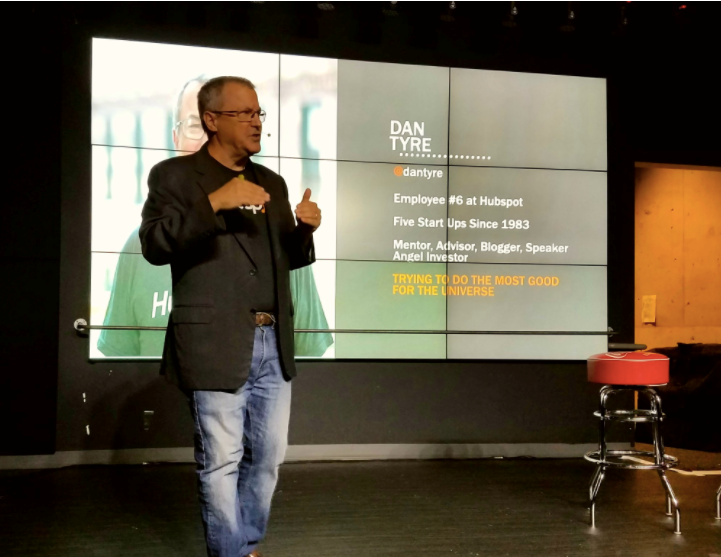
Dan Tyre is a former HubSpot executive, Operating Partner at Stage 2 Capital, and founder of the Tyre Mentorship Program, where he coaches sales and marketing leaders on resilience, goal-setting, and career growth.
Want more like this? Sign up for the monthly newsletter and get insights, lessons, and community updates delivered straight to your inbox — before they hit anywhere else.